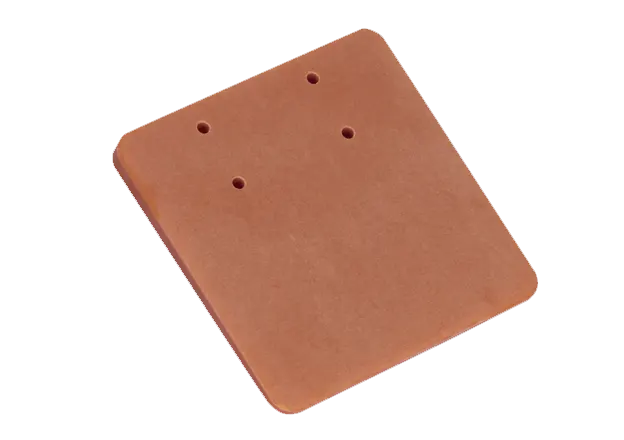
Baquelita, chemically known as phenolic plastic, is recognized as the first type of plastic to be industrially produced. It is renowned for its high mechanical strength, excellent insulation properties, heat resistance, and corrosion resistance, making it ideal for manufacturing electrical materials such as switches, lamp heads, headphones, and telephone cases. The introduction of Bakelite has had a significant impact on industrial development.
Mechanical Properties
Phenolic plastic is characterized as a hard and brittle thermosetting material. Bakelite exhibits non-absorbent and non-conductive properties, along with high-temperature resistance and strength. Its malleability resembles that of wood, which is why it is often referred to as “Bakelite.” The production process involves mixing powdered phenolic resin with sawdust, asbestos, or clay, which is then pressed into molds at high temperatures to create finished products.
Bakelite features a hard surface that is brittle and fragile, producing a sound similar to wooden boards when struck. It is mostly opaque and comes in dark colors such as brown or black, and it does not soften in hot water. Its main component is phenolic resin, contributing to its insulating properties.
Molding Performance
Molding Properties: Bakelite has good molding properties, though it generally exhibits greater shrinkage and directionality compared to amino plastics. It may contain moisture volatiles, so preheating before molding is recommended. Additionally, the mold temperature and molding pressure should be increased if preheating is not performed.
Mold Temperature: The fluidity of Bakelite is significantly affected by mold temperature; typically, fluidity declines rapidly at temperatures above 160°C.
Hardening Speed: The hardening speed of Bakelite is generally slower than that of amino plastics, and the heat released during hardening is substantial. This can lead to high internal temperatures in large, thick-walled plastic parts, resulting in uneven hardening and potential overheating.
When the molar ratio of formaldehyde to phenol is less than 1, thermoplastic products can be obtained, known as thermoplastic phenolic resin or linear phenolic resin. This type does not undergo further condensation and can be cured by adding a curing agent, such as hexamethylenetetramine, at a curing temperature of 150°C, often mixed with fillers to create what is commonly known as Bakelite powder.
Conversely, when the molar ratio of formaldehyde to phenol exceeds 1, an alkali-catalyzed reaction produces stage A resin, which is a thermosetting phenolic resin soluble in organic solvents. This stage A resin contains hydroxymethyl groups that can undergo further condensation, eliminating the need for an external curing agent. Upon heating, this resin transforms into stage B resin, also known as semi-soluble phenolic resin, which is insoluble and non-melting but can swell and soften. Continued reaction leads to the formation of stage C resin, known as insoluble phenolic resin.
The curing of thermosetting phenolic resin can occur through two methods: room temperature curing and heat curing. Room temperature curing can utilize non-toxic agents like NL, although other options such as benzene sulfonyl chloride or petroleum sulfonic acid are available, albeit with higher toxicity and irritant properties.
Proceso de pedido
Q1: Cómo enviar una solicitud de procesamiento?A: Puedes contactar con nosotros vía WhatsApp: +86 15323729231 or email [email protected].B: Admitimos formatos de archivo STEP/STL/IGES. También puedes enviar tus archivos a nuestro correo electrónico de servicio.. Nuestro sistema generará una cotización y procesará las recomendaciones dentro de 1 hora.
Q2: ¿Ofrecen sugerencias de optimización del diseño??A: Sí! Nuestro equipo de ingeniería ofrece un DFM gratuito (Diseño para la fabricabilidad) revisar, Proporcionar sugerencias de optimización para mejorar la estructura y reducir costos..
Precios & Entrega
Q3: ¿Cuál es la cantidad mínima de pedido? (Cantidad mínima de pedido)?A: Sin cantidad mínima de pedido! Aceptamos pedidos a partir de 1 pedazo, ya sea para impresión 3D o mecanizado CNC.
Q4: ¿Qué está incluido en la cotización??A: El presupuesto cubre los costes de material., tarifas de procesamiento, y tratamiento superficial básico (P.EJ., chorro de arena). Procesos adicionales (P.EJ., galvanoplastia, anodizado) se cotizará por separado.
Q5: ¿Cuál es el plazo de entrega estándar??
- Mecanizado CNC: 3-5 días (arriba a 7 días para piezas complejas)
- 3Impresión D: 72 horas
Tecnología & Calidad
Q6: ¿Cuál es la precisión del mecanizado??
- Mecanizado CNC: Creación rápida de prototipos con una tolerancia de ±0,05 mm, 0.1tolerancia de forma mm, y rugosidad de la superficie Ra1.6 o mejor.
- 3Impresión D:
- Piezas de resina: ±0.2mm
- Nylon parts: ±0,3 mm
- Plastic parts: ±0,3 mm
- Metal parts: ±0,3 mm
P7: ¿Qué materiales apoya??✅ CNC Machining:
- Aleación de aluminio: 6061, 7075
- Aleación de cobre: Latón (H59), Cobre rojo (T2)
- Acero aleado: 45# Steel
- Acero inoxidable: SUS304
- Plastics:
- Abdominales (Blanco, Negro)
- Pom (Blanco, Negro)
- Baquelita (Negro, Naranja)
- Acrílico (Transparente)
- Tablero epoxi FR4 (Verde)
- Nailon PA6 (Blanco)
- policarbonato (Transparente)
✅ 3D Printing:
- Resina, Nylon, Plásticos de ingeniería, Acero inoxidable
Servicio postventa
P8: ¿Qué pasa si las piezas no cumplen con los requisitos??A: Si se producen defectos debido a nuestros problemas de procesamiento, Garantizamos remanufactura gratuita..