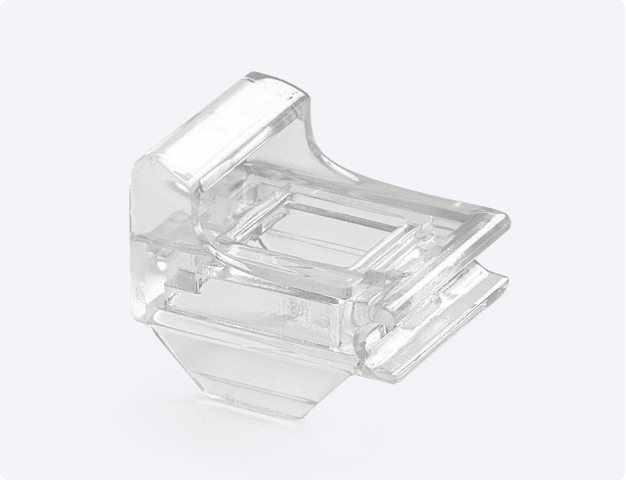
Acrylique, commonly known as PMMA or Plexiglas, is derived from the English term “acrylic plastic” and refers to polymethyl methacrylate. It represents one of the early developments in plastic polymer materials, offering excellent transparency, chemical stability, weather resistance, ease of dyeing, and attractive appearance. Due to these properties, acrylic is widely used in the construction industry and can be categorized into cast sheets, extruded sheets, and molded plastics.
Propriétés mécaniques
Polymethyl methacrylate boasts strong overall mechanical properties, positioning it among the leading general-purpose plastics. Its tensile, bending, and compression strengths surpass those of polyolefins and are higher than those of polystyrene and polyvinyl chloride. While its impact toughness is relatively low, it is slightly better than that of polystyrene. Cast polymerized PMMA sheets, such as those used for aviation-grade Plexiglas, exhibit even higher tensile, bending, and compression strengths, reaching levels comparable to polyamide, polycarbonate, and other engineering plastics.
Typically, the tensile strength of PMMA ranges from 50 to 77 MPa, while its bending strength can reach between 90 and 130 MPa. The upper limits of these performance metrics can match or exceed those of some engineering plastics. However, PMMA has a low elongation at break of only 2%-3%, making it a hard and brittle plastic that is sensitive to gaps and prone to cracking under stress. Unlike polystyrene and ordinary inorganic glass, its fractures tend to be less sharp and uneven. The secondary transition temperature of PMMA is around 40°C, which corresponds to the temperature at which the side methyl groups begin to move; above this temperature, the material’s toughness and ductility improve. It is worth noting that PMMA has low surface hardness and is susceptible to scratching.
The strength of PMMA is influenced by the duration of stress application, decreasing as the duration increases. However, the mechanical properties of oriented PMMA (oriented Plexiglass) improve significantly after tensile orientation, enhancing both strength and notch sensitivity.
In terms of heat resistance, PMMA is not particularly high-performing. Its glass transition temperature is approximately 104°C, but the maximum continuous use temperature varies between 65°C and 95°C depending on working conditions. The heat deflection temperature is about 96°C (at 1.18 MPa), and the Vicat softening point is around 113°C. Heat resistance can be enhanced through copolymerization with acrylate methacrylate or glycol bis-ester acrylate. Cold resistance is also limited, with a brittleness temperature around 9.2°C. PMMA’s thermal stability is moderate, better than that of polyvinyl chloride and polyformaldehyde, but inferior to polyolefin and polystyrene, with a thermal decomposition temperature slightly above 270°C and a flow temperature around 160°C, allowing for a wide range of melt processing temperatures.
The thermal conductivity and specific heat capacity of PMMA are moderate among plastics, measuring 0.19 W/m·K and 1464 J/kg·K, respectively.
Processus de commande
T1: Comment soumettre une demande de traitement?UN: Vous pouvez nous contacter via WhatsApp: +86 15323729231 ou par email [email protected].B: Nous prenons en charge les formats de fichiers STEP/STL/IGES. Vous pouvez également envoyer vos fichiers à notre service email. Notre système générera un devis et traitera des recommandations dans les délais 1 heure.
T2: Fournissez-vous des suggestions d'optimisation de la conception?UN: Oui! Notre équipe d'ingénieurs propose un DFM gratuit (Conception pour la fabricabilité) revoir, fournir des suggestions d'optimisation pour améliorer la structure et réduire les coûts.
Tarifs & Livraison
T3: Quelle est la quantité minimum de commande (MOQ)?UN: Pas de quantité minimale de commande! Nous acceptons les commandes à partir de 1 morceau, que ce soit pour l'impression 3D ou l'usinage CNC.
T4: Ce qui est inclus dans le devis?UN: Le devis couvre les frais de matériel, frais de traitement, et traitement de surface de base (Par exemple, sablage). Processus supplémentaires (Par exemple, galvanoplastie, anodisation) sera cité séparément.
Q5: Quel est le délai de livraison standard?
- Usinage CNC: 3-5 jours (jusqu'à 7 jours pour pièces complexes)
- 3D Impression: 72 heures
Technologie & Qualité
Q6: Quelle est la précision d'usinage?
- Usinage CNC: Prototypage rapide avec une tolérance de ±0,05 mm, 0.1tolérance de forme en mm, et rugosité de surface Ra1,6 ou mieux.
- 3D Impression:
- Pièces en résine: ±0,2 mm
- Pièces en nylon: ±0,3 mm
- Pièces en plastique: ±0,3 mm
- Pièces métalliques: ±0,3 mm
Q7: Quels matériaux soutenez-vous?✅Usinage CNC:
- Alliage d'aluminium: 6061, 7075
- Alliage de cuivre: Laiton (H59), Cuivre rouge (T2)
- Acier allié: 45# Acier
- Acier inoxydable: SUS304
- Plastiques:
- ABS (Blanc, Noir)
- POM (Blanc, Noir)
- Bakélite (Noir, Orange)
- Acrylique (Transparent)
- Panneau époxy FR4 (Vert)
- Nylon PA6 (Blanc)
- Polycarbonate (Transparent)
✅ Impression 3D:
- Résine, Nylon, Plastiques techniques, Acier inoxydable
Service après-vente
Q8: Que faire si les pièces ne répondent pas aux exigences?UN: Si des défauts surviennent en raison de nos problèmes de traitement, nous garantissons une remise à neuf gratuite.