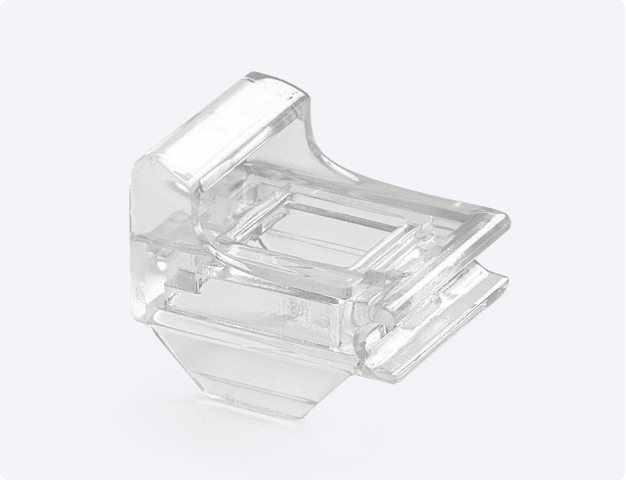
Акрил, commonly known as PMMA or Plexiglas, is derived from the English term “acrylic plastic” and refers to polymethyl methacrylate. It represents one of the early developments in plastic polymer materials, offering excellent transparency, chemical stability, weather resistance, ease of dyeing, and attractive appearance. Due to these properties, acrylic is widely used in the construction industry and can be categorized into cast sheets, extruded sheets, and molded plastics.
Механические свойства
Polymethyl methacrylate boasts strong overall mechanical properties, positioning it among the leading general-purpose plastics. Its tensile, bending, and compression strengths surpass those of polyolefins and are higher than those of polystyrene and polyvinyl chloride. While its impact toughness is relatively low, it is slightly better than that of polystyrene. Cast polymerized PMMA sheets, such as those used for aviation-grade Plexiglas, exhibit even higher tensile, bending, and compression strengths, reaching levels comparable to polyamide, polycarbonate, and other engineering plastics.
Typically, the tensile strength of PMMA ranges from 50 к 77 МПа, while its bending strength can reach between 90 и 130 МПа. The upper limits of these performance metrics can match or exceed those of some engineering plastics. Однако, PMMA has a low elongation at break of only 2%-3%, making it a hard and brittle plastic that is sensitive to gaps and prone to cracking under stress. Unlike polystyrene and ordinary inorganic glass, its fractures tend to be less sharp and uneven. The secondary transition temperature of PMMA is around 40°C, which corresponds to the temperature at which the side methyl groups begin to move; above this temperature, the material’s toughness and ductility improve. It is worth noting that PMMA has low surface hardness and is susceptible to scratching.
The strength of PMMA is influenced by the duration of stress application, decreasing as the duration increases. Однако, the mechanical properties of oriented PMMA (oriented Plexiglass) improve significantly after tensile orientation, enhancing both strength and notch sensitivity.
In terms of heat resistance, PMMA is not particularly high-performing. Its glass transition temperature is approximately 104°C, but the maximum continuous use temperature varies between 65°C and 95°C depending on working conditions. The heat deflection temperature is about 96°C (at 1.18 МПа), and the Vicat softening point is around 113°C. Heat resistance can be enhanced through copolymerization with acrylate methacrylate or glycol bis-ester acrylate. Cold resistance is also limited, with a brittleness temperature around 9.2°C. PMMA’s thermal stability is moderate, better than that of polyvinyl chloride and polyformaldehyde, but inferior to polyolefin and polystyrene, with a thermal decomposition temperature slightly above 270°C and a flow temperature around 160°C, allowing for a wide range of melt processing temperatures.
The thermal conductivity and specific heat capacity of PMMA are moderate among plastics, measuring 0.19 W/m·K and 1464 J/kg·K, respectively.
Процесс заказа
1 квартал: Как отправить запрос на обработку?А: Вы можете связаться с нами через WhatsApp: +86 15323729231 или по электронной почте [email protected].Б: Мы поддерживаем форматы файлов STEP/STL/IGES.. Вы также можете отправить свои файлы на нашу служебную электронную почту.. Наша система сформирует предложение и обработает рекомендации в течение 1 час.
2 квартал: Предоставляете ли вы предложения по оптимизации дизайна??А: Да! Наша команда инженеров предлагает бесплатный DFM (Дизайн для технологичности) обзор, предоставление предложений по оптимизации для улучшения структуры и снижения затрат.
Цены & Доставка
Q3: Какова минимальная сумма заказа (минимальный заказ)?А: Нет минимального заказа! Принимаем заказы от 1 кусок, будь то 3D-печать или обработка на станке с ЧПУ.
Q4: Что входит в предложение?А: В стоимость включены материалы, плата за обработку, и основная обработка поверхности (НАПРИМЕР., пескоструйная обработка). Дополнительные процессы (НАПРИМЕР., гальваника, анодирование) будет указано отдельно.
Q5: Каково стандартное время выполнения?
- Обработка с ЧПУ: 3-5 дни (до 7 дней на сложные детали)
- 3D Печать: 72 часы
Технология & Качество
Q6: Какова точность обработки?
- Обработка с ЧПУ: Быстрое прототипирование с допуском ±0,05 мм., 0.1допуск формы мм, и шероховатость поверхности Ra1,6 или выше.
- 3D Печать:
- Детали из смолы: ±0,2 мм
- Нейлоновые детали: ±0,3 мм
- Пластиковые детали: ±0,3 мм
- Металлические детали: ±0,3 мм
Q7: Какие материалы вы поддерживаете?✅ Обработка на станке с ЧПУ:
- Алюминиевый сплав: 6061, 7075
- Медный сплав: Латунь (H59), Красная Медь (Т2)
- Легированная сталь: 45# Сталь
- Нержавеющая сталь: СУС304
- Пластмассы:
- АБС (Белый, Черный)
- Пома (Белый, Черный)
- Бакелит (Черный, Апельсин)
- Акрил (Прозрачный)
- Эпоксидная доска FR4 (Зеленый)
- PA6 Нейлон (Белый)
- Поликарбонат (Прозрачный)
✅ 3D-печать:
- Смола, Нейлон, Инженерные пластмассы, Нержавеющая сталь
Послепродажное обслуживание
Q8: Что делать, если детали не соответствуют требованиям?А: Если дефекты возникают из-за наших проблем с обработкой, мы гарантируем бесплатное восстановление.